The challenge
Venue rental alone is often not enough to drive growth, while managing additional services typically requires multiple disconnected systems.
Event Venues
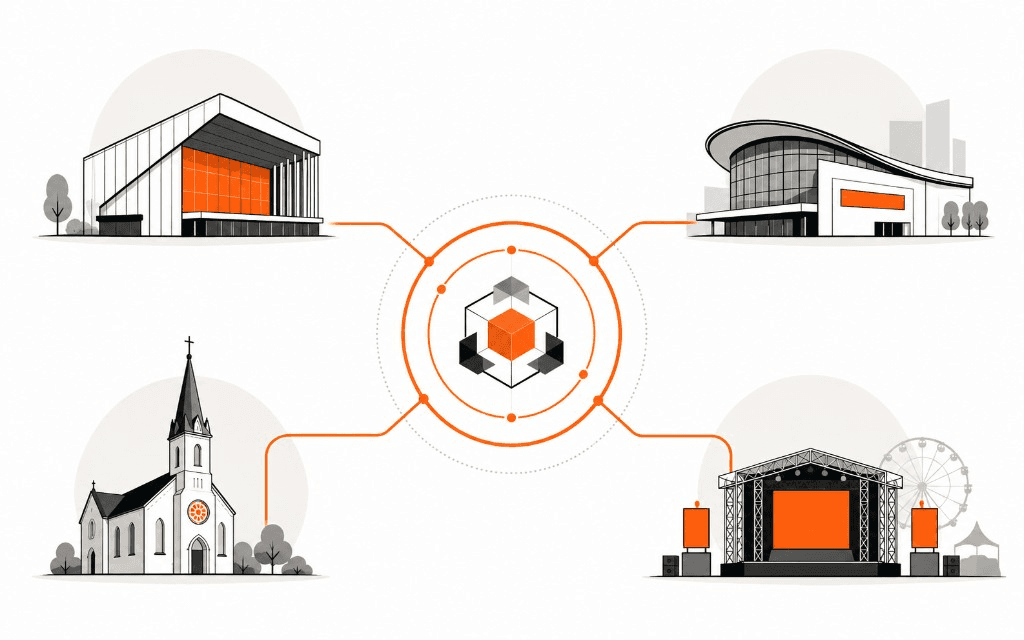
A venue can sell not only its own services but also products and services provided by trusted partners through a single marketplace. Sapluna combines e-commerce, inventory management and project operations into one operating model, turning every order automatically into a managed delivery process and a part of the event project.

Event Venues
Event venues · regional marketplace
Result
The venue evolves from a space provider into a regional service operator that combines facilities, equipment, services and trusted partners into one easy-to-buy solution. Customers enjoy a better experience, partners gain new business opportunities and the venue creates new revenue streams while strengthening its role within the regional event ecosystem.
The Challenge
Event organizers typically need much more than just a venue.
Common purchases include:
Many venues can only provide a list of suppliers or a few contact details. The organizer is then left to search for services, request quotations, place orders and coordinate deliveries.
As a result, the venue loses opportunities to influence the customer experience and generate additional revenue.
Another challenge is that external suppliers may not be familiar with the venue's operating procedures, safety requirements or technical conditions. This increases the risk of delays, misunderstandings and unnecessary coordination.
Many venues also own rentable resources such as:
Selling these resources efficiently is not straightforward.
Building or purchasing a separate booking system can be costly and often creates additional systems that need ongoing maintenance. Traditional e-commerce platforms are designed for product sales, but they do not effectively handle resource reservations, rental equipment management or real-time inventory availability. As a result, separate booking or inventory systems are usually required.
With Sapluna, e-commerce and inventory management operate as one integrated solution. Equipment catalogs, resource registers, stock levels, rental products and delivery processes can all be managed in the same environment. This allows a venue to manage both its own services and partner services through a single operating model.
Venues need an operating model that enables them to manage their resources, build a trusted partner ecosystem and offer customers everything they need from one place.
Sapluna enables a controlled network organization where local service providers gain visibility and new customers through the venue. In return, partners commit to shared operating practices, delivery standards and service quality.
The venue manages its regional service network in the same way as a curated service portfolio: successful services remain available, while services that fail to meet expectations can be removed.
The result is a high-quality ecosystem that benefits event organizers, service providers and the venue alike. This leads to a better customer experience, smoother deliveries and a stronger venue brand.
The Sapluna Path Model
Regional Service Network Path
Service Source
The venue brings together:
These create a shared regional service offering that customers can easily discover and purchase from a single marketplace.
Sales and Delivery Activation
The customer places an order through the marketplace. Sapluna:
For partner products and services, payments can be routed directly to the service provider. The venue can also earn commission revenue if desired.
Production and Delivery
After an order is placed, all delivery-related information moves through a single path:
Information collected during the sales process automatically becomes part of the production and delivery workflow.
Example Workflow
Venue Rental and Additional Service Orders An event organizer rents a venue. At the same time, Sapluna launches a predefined project containing all required event information and production paths.
A dedicated project is automatically created for the event.
The organizer also needs:
These services are available directly through the venue marketplace.
The organizer places the order through the marketplace.
Order information is automatically connected to the event project.
The supplier immediately receives:
The delivery becomes part of the overall event project.
The venue, organizer and supplier work using the same source of information.
How Is Sapluna Different from a Traditional Online Store?
A traditional online store ends when an order is placed.
With Sapluna, the delivery process begins when the order is placed.
Sapluna combines:
Every order automatically becomes a managed delivery process that can be handled either as a standalone delivery project or as part of a larger event project. The same system manages both sales and resource availability, ensuring that inventory levels, equipment utilization and delivery processes remain continuously up to date.
Results
The challenge
Venue rental alone is often not enough to drive growth, while managing additional services typically requires multiple disconnected systems.
How Sapluna helped
Sapluna combines e-commerce, inventory management, partner networks and project operations into a single operating model where every order becomes a managed delivery path and part of the event delivery process.
The outcome
The venue evolves from a space provider into a regional service operator that combines facilities, equipment, services and trusted partners into one easy-to-buy solution. Customers enjoy a better experience, partners gain new business opportunities and the venue creates new revenue streams while strengthening its role within the regional event ecosystem.
More in this category