Sapluna
What Is SaplunaCase Studies
About
FIEN
Log inBook a Demo

Newsletter

Get Sapluna insights in your inbox

Release notes, production ideas, and customer stories — a few times a year. Unsubscribe anytime.

Sapluna

The operating model and workspace for events and service projects.

sales@sapluna.com
Tapahtumateollisuus ry — Olemme jäsen

Product

  • What Is Sapluna
  • Case Studies
  • Services
  • Consultations
  • Courses & webinars
  • Lectures
  • Venue auditing
  • Pricing
  • Software licenses
  • Service packages
  • Compare

Company

  • About
  • Insights
  • Blog
  • News
  • Contact

Legal

  • Security
  • Privacy
  • Terms
  • Accessibility

© 2026 Sapluna Systems Oy. All rights reserved.

Kauppakatu 39, 40100 Jyväskylä · 3495688-7

Event Venues

Solve Event Venue Challenges Before They Become Event Problems

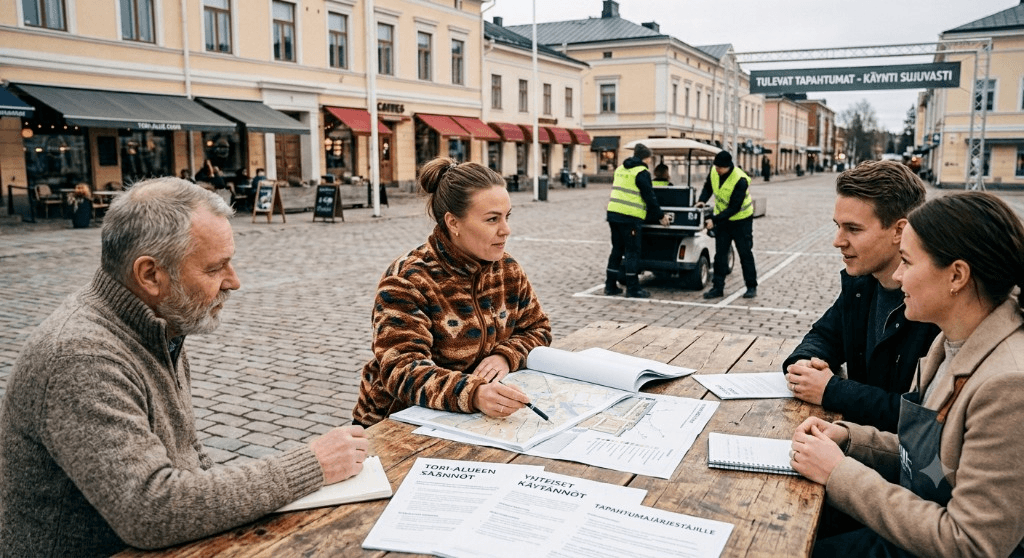
Well-functioning event venues are built on predictable operating models, not constant reaction. Sapluna helps event venues collect, develop and apply shared operating models before individual event projects begin. When the rules are clear in advance, event delivery becomes smoother for organisers, authorities, local stakeholders and venue staff.
Solve Event Venue Challenges Before They Become Event Problems

Event Venues

Event venues · development path

Result

Organisers understand the rules before work begins. Stakeholders understand what can be delivered at the venue, and authorities can evaluate projects against approved operating models. Every event generates knowledge that helps improve the next one. The result is smoother event delivery, stronger collaboration, reduced risk and a more attractive event venue.

Book a Demo

The Challenge

Many event venues face the same recurring issues year after year.

Residents, businesses, authorities and other stakeholders may raise concerns during planning or implementation, forcing changes in the middle of a project.

This often leads to:

  • last-minute plan changes
  • revised bookings and purchases
  • additional negotiations
  • increased workload for organisers
  • extra administrative work for authorities
  • higher production and safety risks

Complaint handling can also consume significant time and resources. Information is often scattered across emails, documents and systems, requiring investigations to start from scratch. This reactive approach places unnecessary strain on all parties and slows long-term venue development.

Sapluna Event Venue Development Path

01

Source

Information is collected from:

  • stakeholder surveys and forms
  • development group discussions
  • feedback from previous events
  • authority requirements
  • event analytics
  • event calendar data
  • organiser experiences
02

Processing

Stakeholders review observations and agree on common operating models using Sapluna workspaces. Information is enriched through:

  • communication
  • documentation
  • workspace discussions
  • analytics
  • decision-support materials
03

Usage

Approved operating models are saved as project templates. When a new event project begins:

  • organisers select an appropriate template
  • tasks guide execution
  • documents are ready for use
  • communications start automatically
  • future projects appear in the event calendar
  • project progress is documented automatically

This allows venue learning to be transferred directly into future projects.

Example Workflow

  1. 01

    Development Needs Identified

    Examples include:

    • noise management
    • traffic arrangements
    • area restrictions
    • safety requirements
    • authority processes
    • resident and business feedback
  2. 02

    Stakeholders Process Information

    Participants may include:

    • local businesses
    • residents
    • authorities
    • property owners
    • venue staff
  3. 03

    Operating Models Become Project Templates

    Examples:

    • sales event model
    • concert event model
    • fenced event area model
    • open event area model
    • sports venue event model

    Templates may include:

    • operating procedures
    • responsibilities
    • tasks
    • documents
    • metrics
    • constraints
  4. 04

    Models Are Approved

    Approved operating models are stored as reusable project templates.

  5. 05

    Organisers Use the Model

    Organisers immediately see:

    • what can be implemented
    • applicable restrictions
    • required permits
    • responsibilities
    • required tasks
    • required materials
    • required documents
    • communication requirements
  6. 06

    Communication Happens in One Environment

    Messages, decisions, instructions and discussions remain connected to the project.

  7. 07

    Complaint Handling Is Based on Facts

    Users can review:

    • the approved event model
    • project changes
    • responsible persons
    • discussions
    • communications
    • documents
    • approvals
    • read receipts
    • measurement data
    • the complete event log
  8. 08

    Continuous Improvement

    Analytics help identify:

    • successful practices
    • recurring problems
    • areas for improvement
    • factors affecting venue attractiveness

Results

  • Less manual work
  • Better data quality
  • Clear responsibilities
  • Better collaboration
  • Single source of truth
  • Reduced project risk
  • More predictable operations
  • More effective stakeholder collaboration
  • Ready-made project templates
  • Clear guidance for organisers
  • Centralised communication and hotline
  • Better event calendar management
  • Analytics and continuous improvement
  • Faster and more transparent complaint handling
  • Less administrative work for authorities
  • Better organiser experience
  • More attractive event venue

The challenge

Problems often emerge during event projects, creating additional work for organisers, authorities and venue operators.

How Sapluna helped

Sapluna brings development groups, project templates, documentation, communication, analytics and event logs into one shared operating environment.

The outcome

Organisers understand the rules before work begins. Stakeholders understand what can be delivered at the venue, and authorities can evaluate projects against approved operating models. Every event generates knowledge that helps improve the next one. The result is smoother event delivery, stronger collaboration, reduced risk and a more attractive event venue.

More in this category
Event Venues

Managing Event Venues Through a Shared Operating Model

Managing Event Venues Through a Shared Operating Model

Event venues · shared operating model

Result

The organization gained a shared operating model that can be deployed across all venues. Knowledge became organizational rather than personal, service quality improved and customers received a consistent experience regardless of venue or contact person.

Read more
How a Venue Can Increase Revenue Through a Regional Marketplace

How a Venue Can Increase Revenue Through a Regional Marketplace

Event venues · regional marketplace

Result

The venue evolves from a space provider into a regional service operator that combines facilities, equipment, services and trusted partners into one easy-to-buy solution. Customers enjoy a better experience, partners gain new business opportunities and the venue creates new revenue streams while strengthening its role within the regional event ecosystem.

Read more
How Can a Venue Identify Future Events Before a Request for Proposal Is Submitted?

How Can a Venue Identify Future Events Before a Request for Proposal Is Submitted?

Event venues · event sales

Result

The venue no longer waits for ready-made requests for proposals. Instead, it identifies future events while they are still ideas. This enables earlier engagement, better customer understanding and greater influence over event planning. More event ideas become successful events, increasing revenue opportunities and strengthening customer relationships.

Read more

Case studies

Ready to give your event the operating model it deserves?

Book a free demo and see how Sapluna makes your event concept predictable and high quality.

Book a DemoSee how the concept becomes a model